The Right to Education (RTE) Act is an important mechanism for expanding access to education for all children in Uttar Pradesh. Under this Act, eligible children are provided the opportunity to gain admission to private schools, with the government covering the prescribed costs associated with their education. To support this system, the Yogi government has allocated ₹698 crore for the education of children under the RTE framework.
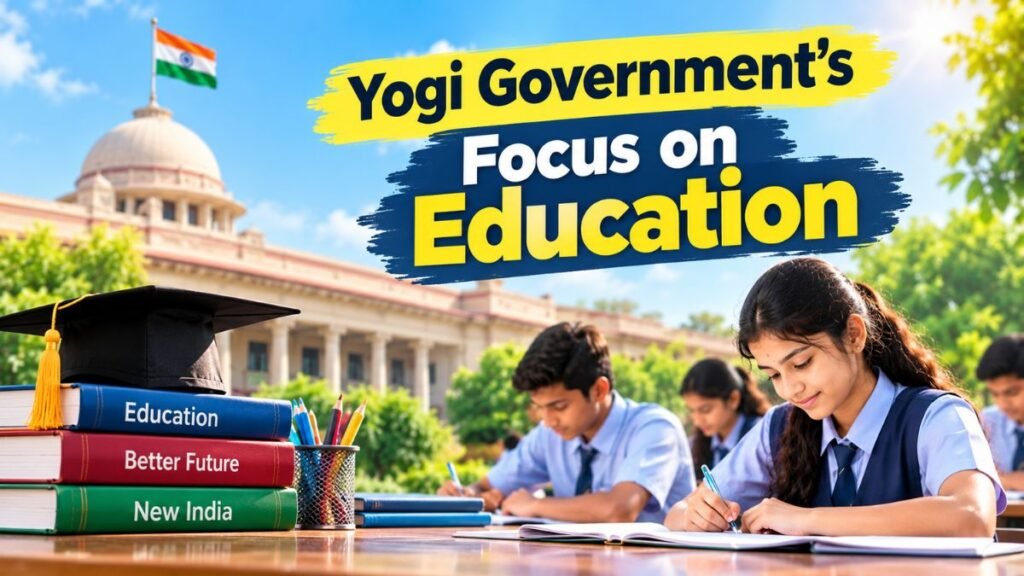
This sum could be significant for families who are unable to send their children to private schools due to financial reasons. This allocation also highlights the government’s priority regarding the implementation of the RTE (Right to Education) Act in the state, the participation of schools, and the education of eligible children.
What is the RTE and How Does It Work?
Under the Right to Education Act, 2009, children aged 6 to 14 years are granted the right to free and compulsory education. According to Section 12(1)(c) of the Act, at least 25 percent of the seats at the entry-level grade in private, unaided schools are reserved for children from weaker sections and disadvantaged groups.
The purpose of this system is to prevent children from being deprived of a good education due to their economic or social background. Schools are reimbursed for the education of children admitted under the RTE (Right to Education) Act, in accordance with established rules. In this way, the child secures admission, and the school receives compensation for the associated costs through the government system.
Why Is the Allocation of ₹698 Crore Significant?
The process of admitting children under the RTE (Right to Education) Act—which includes receiving applications, verifying eligibility, coordinating with schools, and disbursing reimbursements—requires resources at every stage. The allocation of ₹698 crore is a crucial step toward providing financial support to this system.
The impact of these funds will depend on how efficiently they are utilized. Timely reimbursement can assist schools in educating children admitted under the RTE (Right to Education) Act. If families are provided with clear information regarding admissions and schooling, the benefits of the scheme can reach a larger number of eligible children.
The announcement of the allocation does not, in itself, guarantee that every eligible child will secure admission. This also requires the proper implementation of the scheme, a transparent selection process, and the timely resolution of grievances.
What Are the Potential Benefits for Families and Children?
The RTE (Right to Education) Act can directly benefit children whose families struggle to afford private school fees. Through reserved seats, these children gain the opportunity to study in schools that were previously beyond their reach.
After admission, it is essential to ensure that children continue their education, monitor their attendance, and support their learning. Merely securing admission is not enough; children need to receive support in the classroom and benefit from an inclusive environment that ensures no one is left behind.
Through the RTE (Right to Education) Act, children from diverse social and economic backgrounds get the opportunity to study together. This can foster mutual understanding and a sense of equality among children, provided that schools treat all students with respect.
What is necessary to implement the plan properly?
The benefits of the RTE (Right to Education) Act will reach more families only if the processes for eligibility, application, and admission are simple and transparent. Families should be provided with clear information regarding application deadlines, required documents, and the selection process. Furthermore, assistance should be made available to families who face difficulties in completing the online application process.
Monitoring the admission status following the selection process and ensuring timely reimbursement to schools should be a regular practice. Delays in payments can lead to complications between schools and families. Therefore, the relevant departments should oversee the payment process and ensure it is completed on time.
It is also essential to monitor the education and school experience of the children who have been admitted. Children should have access to books, classroom activities, and necessary academic support. Both the school and the administration must ensure that no child feels isolated.
The Way Forward
An allocation of ₹698 crore provides financial support to expand educational opportunities under the RTE (Right to Education) Act. Its success will depend on the transparent use of these funds, ensuring that information reaches eligible families, and that children receive continuous support while in school.
The scheme could be more effective through coordination among the government, schools, parents, and local communities. If every stage—from the initial application process to admission and the continuation of studies—is monitored, the RTE (Right to Education) Act can help bring more children into the fold of education. Ultimately, the true significance of this allocation will lie in how many children gain access to a better education and are able to continue their studies
FAQ
1. RTE ke tahat 25 pratishat seaton ka kya matlab hai?
RTE Adhiniyam ki dhara 12(1)(c) ke anusaar, niji gair-sahayata-prapt schoolon mein pravesh star ki kaksha ki kam se kam 25 pratishat seaten kamzor varg aur vanchit samooh ke bachchon ke liye aarakshit hoti hai.
2. ₹698 crore ka aavantan kis kaam aayega?
Yeh aavantan RTE ko lagu karne aur yojana ke tahat bachchon ki shiksha se judi lagat ko sahara dene ke liye hai. Rakam ke istemal aur bhugtan ki jaankari aadhikarik sarkari ghoshnaon se dekhi ja sakti hai.
3. RTE ke liye aavedan kaise kare?
Aavedan ki tareekh aur prakriya sarkar ke jaari kiye gaye nirdeshon ke anusaar hoti hai. Parivaron ko aadhikarik portal ya shiksha vibhag ki soochna dekhkar aavedan karna chahiye. Madad ke liye sthaniya shiksha karyalaya se sampark kiya ja sakta hai.
4. Aavedan ya admission mein dikkat ho to kya kare?
Parivar sambandhit school, sthaniya shiksha adhikari ya Uttar Pradesh shiksha vibhag ke aadhikarik shikayat madhyam se sampark kar sakte hain. Aavedan sankhya aur zaruri dastavez sambhal kar rakhne se shikayat darj karne mein madad milegi.