
The Centre has told the Supreme Court that an expert committee recommends replacing the percentile-based qualifying system for NEET-PG and NEET-SS with rank-based merit lists from 2027. The National Medical Commission has given the proposal in-principle approval, but new regulations are still being prepared.
The postgraduate medical admission process in India could change from 2027. The Centre has informed the Supreme Court that a 12-member expert committee reviewing NEET admissions has proposed using ranks instead of percentiles for counselling to postgraduate and super-speciality medical courses.
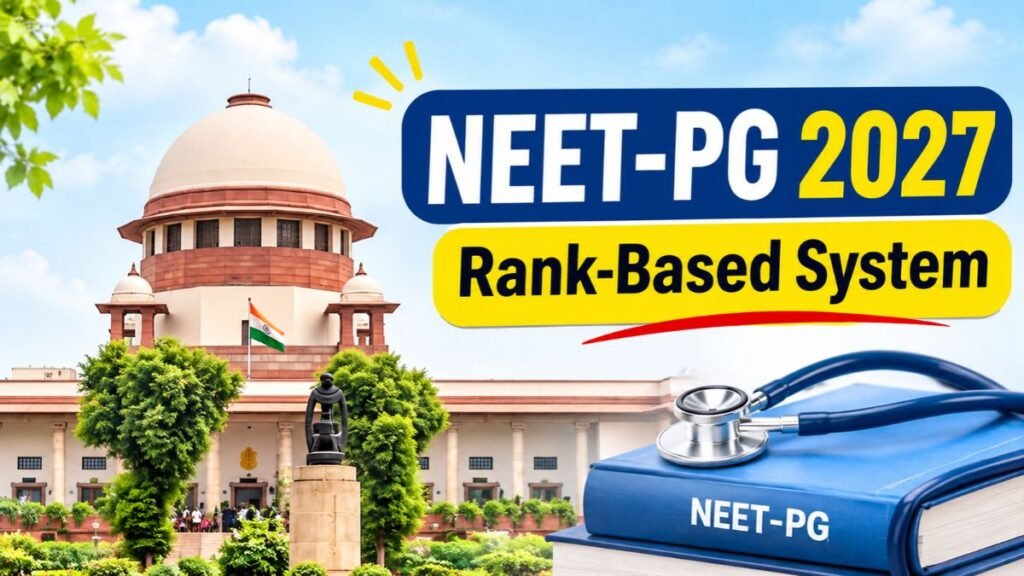
The proposal covers the National Eligibility-cum-Entrance Test for Postgraduates (NEET-PG) and the National Eligibility-cum-Entrance Test for Super Speciality (NEET-SS). Under the recommended approach, results would show candidates’ ranks, while percentile marks would no longer be declared for counselling.
The change has received in-principle approval from the National Medical Commission (NMC), India’s medical education regulator. However, the regulations are not final. The Centre’s report says the NMC is preparing new rules, which are expected to go through stakeholder consultation before they are adopted. Candidates should treat the shift as a proposal, not a finalized change to the NEET-PG 2027 process. (The Indian Express; Bar & Bench)
What Has the Centre Proposed?
The main recommendation is to move from a percentile-based qualifying system to a rank-based merit system for NEET-PG and NEET-SS counselling. The committee’s report says that under the proposed regulations, candidates would receive ranks and percentile marks would not be declared in the results.
The Supreme Court was informed that the NMC has approved the proposal in principle. This means the regulator supports the change, but its details still need to be set out in formal regulations. The NMC is preparing those regulations, which are yet to be finalized. (The Indian Express; LiveLaw)
The committee has linked the proposed system to delays in counselling, particularly between later rounds. Under the current approach, authorities may reduce qualifying percentiles when seats remain vacant. A rank-based process is intended to help authorities complete counselling within the scheduled timeline.
The practical details are not settled yet. The regulations will need to explain how ranks are calculated, which candidates can participate in counselling, how category-wise eligibility will be handled and how the process will respond to vacant seats. The final rules will determine how the proposal works.
Rank Versus Percentile: What Is the Difference?
A rank shows a candidate’s position compared with other candidates. For example, a rank of 500 means that 499 candidates are placed ahead of that candidate in the relevant merit list, subject to rules for ties and categories.
A percentile describes how a candidate performed compared with other test takers. It is not the same as percentage marks. A 90th percentile generally means that a candidate scored as well as or better than about 90% of candidates in the comparison group.
In the current NEET-PG framework, percentile thresholds have been used as qualifying criteria. Meeting the threshold can make a candidate eligible for counselling, but eligibility alone does not guarantee a seat. Allocation also depends on merit position, category, preferences, seat availability and counselling rules.
Under the proposal, ranks would play a more central role in published results. However, rank-based results would not automatically determine who is eligible for counselling. Eligibility will depend on the final regulations, including any minimum qualifying standard authorities decide to retain.
Why Is the NEET-PG System Being Reviewed?
The review follows controversy over the reduction of NEET-PG qualifying cut-offs for the 2025–26 admission cycle. The qualifying marks were sharply lowered for later counselling, prompting petitions and questions about the effect on examination standards and postgraduate medical education.
According to reports on the court proceedings, the qualifying score for General and EWS candidates was reduced from 276 to 103 marks out of 800. For SC, ST and OBC candidates, it was lowered from 235 to minus 40 marks. The changes were intended to allow more candidates to participate as authorities worked to fill vacant seats. (Bar & Bench; LiveLaw)
The reduction led to a broader debate: how should the admission system balance filling postgraduate medical seats with maintaining standards? Petitioners have challenged the lowered qualifying criteria, arguing that allowing candidates with very low or negative marks into counselling could weaken merit and affect medical education. Authorities have also had to address the practical problem of seats remaining vacant.
The Supreme Court directed the Union government to review the admission system, identify problems and recommend workable solutions. The committee’s report is part of that review. During the hearing, the Court gave petitioners time to respond to the report and adjourned the matter. The court proceedings and the government’s regulatory work are therefore still relevant to what happens next. (Bar & Bench)
Will a Rank-Based System Stop Cut-Offs from Being Lowered?
Not necessarily. Changing how results are presented does not, by itself, settle the question of minimum eligibility. A rank list can order candidates by performance, but the regulations still need to define who may participate in counselling and whether a minimum qualifying standard applies.
This distinction is central to the debate. A candidate may have a rank among all test takers, while the rules still set a minimum threshold for counselling eligibility. The proposal, as reported so far, does not provide all the operational details needed to say exactly how future cut-offs will work.
The committee has also said that the importance of the competitive examination should not be reduced to an administrative formality. At the same time, authorities have to address unfilled seats and counselling delays. How the final rules balance those concerns will shape the impact of the reform.
What Else Has the Committee Recommended?
The proposed rank-based system is one part of a broader set of recommendations on vacant seats and counselling.
Steps to Address Vacant Medical Seats
The committee has suggested that authorities consider lower fees for non-clinical postgraduate courses. It has also recommended exempting candidates entering pre-clinical and para-clinical courses from service bond requirements, as these obligations may discourage candidates from accepting certain seats.
For dental and nursing courses, the committee has suggested reviewing fees and considering whether seats that remain vacant for two to three consecutive years should continue. It also pointed to the need for more employment opportunities for graduates in these fields. These are recommendations for relevant authorities to consider, not changes that have already been implemented. (Bar & Bench)
More Digital Counselling
The committee’s report also addresses counselling delays and the process for candidates who receive allotted seats. The Medical Counselling Committee (MCC) has introduced online processes that allow candidates seeking an upgrade to accept a seat online and apply for an upgrade without first travelling to the institution. Candidates can complete admission and fee payment at the institution where they ultimately decide to join.
The report also describes efforts to improve access to verified seat information. A reliable seat matrix matters because candidates need accurate details before making their choices, and late corrections can disrupt counselling. The committee has recommended that the NMC, the National Board of Examinations in Medical Sciences (NBEMS) and the National Testing Agency (NTA) provide verified seat details well before counselling begins. (Bar & Bench; The Indian Express)
Other recommendations include a fixed counselling schedule, updated standard operating procedures, regular meetings with stakeholders and an online system for sharing results with state counselling authorities. The MCC is also expected to create an audit mechanism from 2027 to identify counselling problems and develop practical solutions. (The Indian Express)
What Should NEET-PG Candidates Do Now?
Candidates preparing for NEET-PG 2027 should follow official updates from the NMC, NBEMS and the relevant counselling authorities. The proposed change may affect how results are reported and how merit lists are used. Until formal regulations are issued, candidates should not assume the details are final.
Candidates should look for official clarification on:
- Whether percentile scores will be removed from results.
- How ranks will be calculated and ties resolved.
- Whether a minimum qualifying threshold will remain.
- How category-wise eligibility and counselling will work.
- When the regulations will apply and how they will affect NEET-PG 2027.
The proposal also covers NEET-SS candidates because the recommendation includes super-speciality admissions. The same advice applies: the final rules and official notices will define the process.
What Happens Next?
The committee has submitted its report to the Supreme Court, and petitioners have been given time to respond. Meanwhile, the NMC still needs to finalize and issue the proposed regulations. Stakeholder consultation is expected before the rules take effect.
The timeline and final provisions will determine whether the new system begins with NEET-PG 2027 and how it will work alongside counselling schedules and eligibility requirements. For now, the most accurate description is that a rank-based system has been recommended and approved in principle, but has not yet been implemented through final regulations
Frequently Asked Questions
1. Will NEET-PG 2027 use a rank-based system?
The Centre has told the Supreme Court that an expert committee recommended a rank-based system for NEET-PG and NEET-SS. The NMC has given the proposal in-principle approval, but the regulations are still being finalized. Candidates should wait for official rules before treating the change as confirmed.
2. What is the difference between percentile and rank?
A percentile compares a candidate’s performance with that of other test takers. A rank gives the candidate a position in a merit list. Percentile is not the same as percentage marks.
3. Does the proposal also cover NEET-SS?
Yes. The committee’s recommendation covers both NEET-PG and NEET-SS admissions.
4. Where should candidates check for updates?
Candidates should rely on official notices from the NMC, NBEMS and the applicable counselling authorities, including MCC for counselling under its remit.
Conclusion
The Centre’s submission to the Supreme Court signals a possible major change in NEET-PG and NEET-SS admissions from 2027. The proposed rank-based approach is intended to make merit-based counselling clearer and help reduce delays. It is part of a broader effort to improve counselling, verify seat information and address vacant postgraduate medical seats.
Questions about qualifying standards remain central. A rank list may make candidates’ relative positions clearer, but the final regulations will determine eligibility, cut-offs and how vacant seats are handled. Candidates should follow official notices as the NMC develops the rules and the Supreme Court considers the committee’s report.
Related Articles
https://upjobseva.com/uttar-pradesh-schools-holidays-15-day-reviews/
https://upjobseva.com/up-high-court-orders-teachers-verification/